
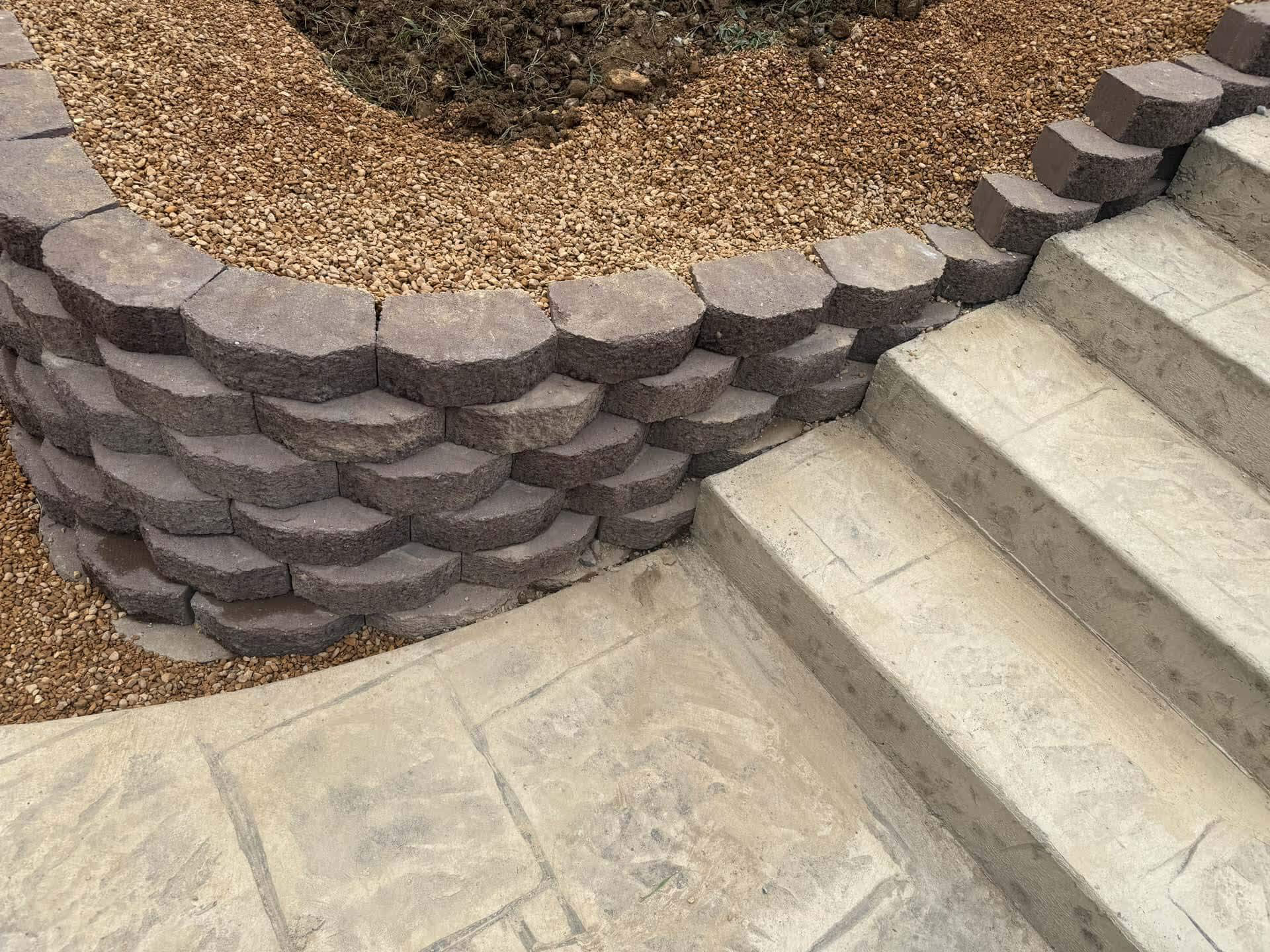
Retaining Wall Drainage Guide: How Proper Drainage Protects Your Wall
Drainage is critical to retaining-wall performance because water can collect behind a wall and affect pressure and soil conditions. Proper water management matters for properties across Cleveland, Chattanooga, and surrounding East Tennessee communities.
📖 9 min read • Updated August 2026 • East Tennessee
Why Retaining Wall Drainage Matters
Drainage is critical to retaining-wall performance because water can collect behind a wall and change the conditions in the soil it supports. On properties across Cleveland, Chattanooga, and East Tennessee, uncontrolled water can increase pressure, contribute to erosion, and affect the site around a wall.
Retaining walls are designed to resist soil forces, but saturated soil, hydrostatic pressure, soil movement, drainage outlets, and runoff all matter to long-term wall and site performance.
What Happens When a Retaining Wall Does Not Drain Properly?
Drainage concerns can appear in different ways and do not always mean a wall has a structural failure.
- Water buildup behind the wall.
- Soil saturation and increased pressure.
- Erosion or drainage through unwanted areas.
- Staining or moisture-related issues.
- Wall movement or leaning as a potential warning sign.
Movement or significant damage should be professionally evaluated because symptoms can have multiple causes.
Signs Your Retaining Wall May Have a Drainage Problem
- Water pooling behind or near the wall.
- Consistently saturated soil or erosion.
- Water flowing over the wall.
- Clogged or ineffective drainage outlets.
- Unusual staining, soil movement, or visible leaning.
Review these signs of drainage problems when water repeatedly affects the wall area.
How Retaining Wall Drainage Works
Drainage behind a retaining wall commonly relies on drainage aggregate, perforated drainage pipe, outlets, filter fabric where appropriate, grading, controlled discharge, and surface-water management. The details should suit the wall design and property rather than follow a universal specification.
Common Retaining Wall Drainage Solutions
- Drainage aggregate and perforated drain pipe.
- Daylight outlets where appropriate.
- Surface drains or French drains for suitable conditions.
- Grading improvements and downspout/runoff management.
- Erosion-control measures.
The right approach depends on wall type, grading, soil, water source, and discharge conditions. French drain installation and storm water management may be part of the solution.
Retaining Wall Drainage and Storm Water Management
Roof runoff, driveway runoff, surface water, slopes, heavy rainfall, discharge locations, and erosion all influence drainage around a retaining wall. Our storm water management guide explains how broader site drainage connects to runoff control.
Common Retaining Wall Drainage Mistakes
- Building without considering drainage.
- Allowing water to collect behind the wall.
- Directing downspouts toward the wall.
- Blocking outlets or failing to plan discharge.
- Relying only on surface grading when subsurface water is involved.
- Ignoring erosion or obstructing outlets during landscaping.
- Waiting until significant movement occurs.
How Drainage Can Help Protect a Retaining Wall
- Better control of water behind and around the wall.
- Reduced water buildup and improved runoff management.
- Better protection of surrounding soil and reduced erosion risk.
- Improved coordination between grading and drainage.
- More intentional long-term site management.
Proper drainage supports water management but does not guarantee a particular structural outcome.
When Should You Have a Retaining Wall Evaluated?
Consider an evaluation for visible leaning, cracking, significant soil movement, recurring water buildup, severe erosion, failed outlets, water repeatedly flowing toward the wall, or uncertainty about the source of the drainage problem. Drainage issues and structural wall issues are not necessarily the same thing.
Retaining Wall Drainage vs. Retaining Wall Replacement
A drainage issue does not automatically mean the wall needs replacement. Identifying the water source, evaluating wall condition, correcting drainage where appropriate, and determining whether movement is drainage-related, structural, cosmetic, or site-related helps guide major decisions.
Why Choose Dry Ground Pros?
Dry Ground Pros considers retaining walls, drainage, storm water management, French drains, grading, and site conditions together when appropriate for East Tennessee properties.
- Local understanding of Cleveland, Chattanooga, and surrounding East Tennessee properties.
- Drainage-focused property improvement.
- Attention to grading and water-flow conditions.
- Retaining-wall and drainage services considered together when appropriate.
- Solutions based on actual property conditions.
Frequently Asked Questions
Why is drainage important for a retaining wall?
It helps manage water behind and around the wall, where saturation can affect soil and site conditions.
What happens if water builds up behind a retaining wall?
It can saturate soil and contribute to pressure, erosion, and moisture-related concerns.
What type of drainage is used behind retaining walls?
Appropriate systems may include aggregate, perforated pipe, outlets, grading, and surface-water controls.
Can a French drain help with retaining wall drainage?
It can help with appropriate subsurface or localized water conditions when it suits the site and discharge plan.
How can I tell if my retaining wall has a drainage problem?
Pooling water, saturated soil, erosion, staining, blocked outlets, and movement are signs worth assessing.
Does a drainage problem mean my retaining wall needs to be replaced?
Not necessarily. The water source and wall condition should be evaluated before deciding on repair or replacement.
Need Help With Retaining Wall Drainage?
Whether you are dealing with runoff, pooling water, or erosion, Dry Ground Pros can help evaluate the drainage conditions affecting your property.
Hear It From Local Homeowners


Ralf and his team are real pros! Great communication throughout the entire process. Very reasonable pricing, but excellent work. Its hard to find great companies these days, im glad I found DGP. I highly recommend you give them a call for your drainage needs! Very happy with their work! Did all my work in 1 day!


Great to work with, quality work, takes time to listen and plan, very communicative.

Ralph with dry ground pros is the best you need storm water management and drainage at your home or business he should be your first call! Great personality and amazing attitude for business!

Ralf did a great job assessing what was needed, was very flexible and open to my suggestions, and his guys worked hard to make sure nothing was damaged and the work was impeccable.

They installed a French drain system and redirected the stormwater away from the house. The results were immediate — after the next big rain, not a single puddle. The team was professional, on time, and left the yard looking even better than before. It’s rare to find a business that combines great service with real expertise, but these guys nailed it.

Owner prides himself in providing customers the best service and experience.


Protect Your Retaining Wall Site Conditions
Effective grading and drainage help manage runoff around your home, hard surfaces, and landscape. Dry Ground Pros is here to help you assess the conditions affecting your property.